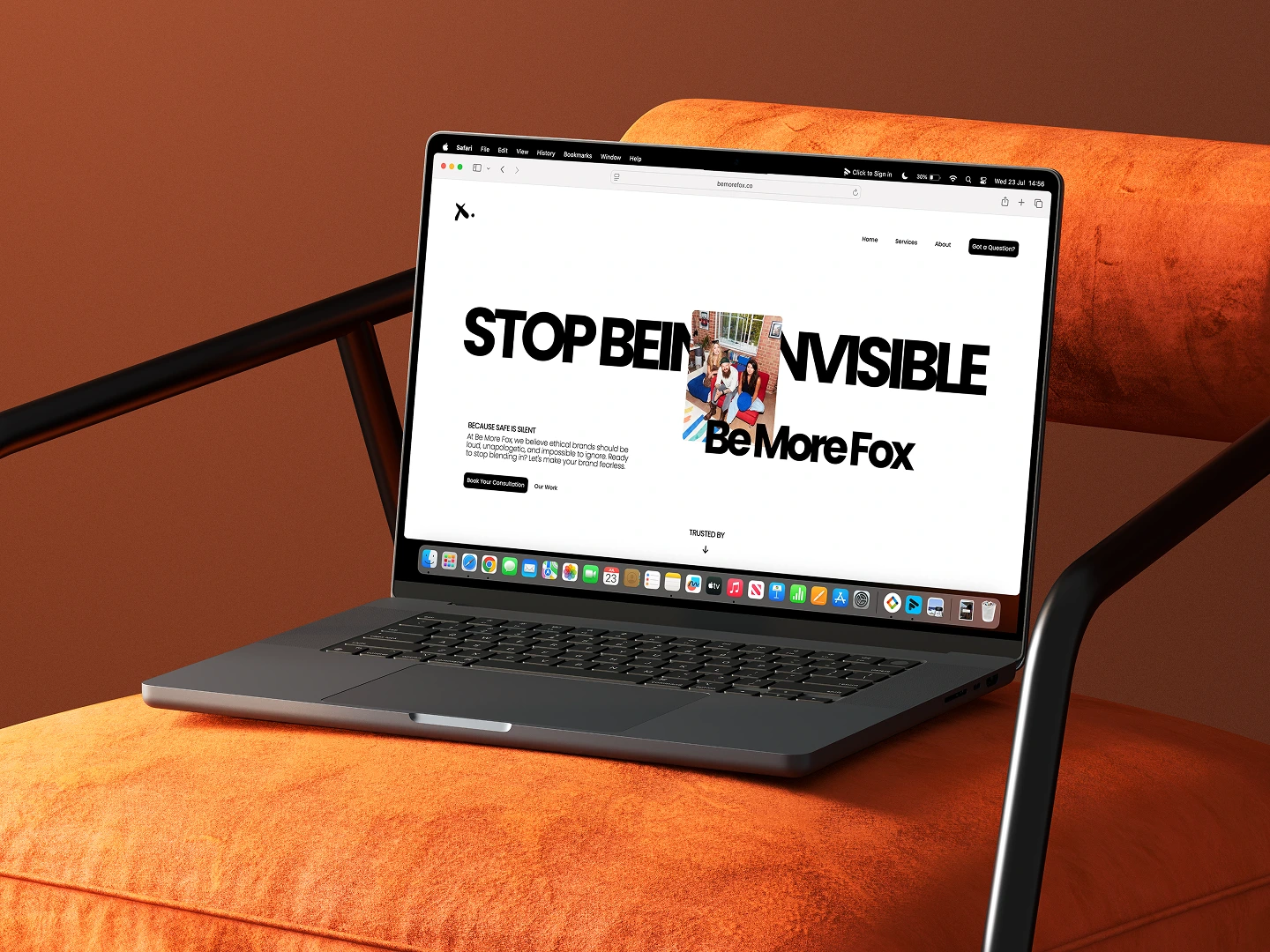
A Shopify to Webflow migration makes sense when your site's main job is to show your work, explain your services and bring in enquiries, not to run a store. The site is recreated in Webflow, its content moves into CMS collections, and every Shopify URL gets a 301 redirect, as we did for Be More Fox.
It matters because Shopify is built around products. Its fixed paths, like /pages/ and /collections/, and its theme structure suit a store well, but they get in the way when the site is really a portfolio, an agency site or a services business. Moving gives you design freedom without giving up the rankings you've earned.
This guide covers the Shopify site we moved, when you should stay on Shopify, how the two platforms compare, and an eight-step migration with what to check at each step. It's the same process we follow as a B2B web design agency on every move to Webflow, from any platform. For what a build includes, see our Webflow development service, and for your own redirect map, the free migration plan comes back within 48 hours.
It's the move of your website from Shopify's hosting and theme to Webflow, keeping the same domain. Pages, blog posts, images and SEO settings come across, the design is recreated in Webflow, and Shopify's URL patterns are mapped to the new site with 301 redirects.
Some businesses move everything. Others move the brand site and keep a store on Shopify alongside it. The free plan sets out which route fits.
Be More Fox, a brand marketing agency, had outgrown their old site, and Shopify was holding them back. The site no longer showed the strength of their work or the quality of clients they work with. The structure was rigid and the design felt dated.
We started with a deep dive into their brand, vision and goals, explored the visual direction and brought it to life in Figma. The first concept was approved with barely a revision. We moved straight into development and built a responsive Webflow site that's easy to manage, with subtle motion and a structure designed to convert more of the right enquiries.
That's the pattern where a move pays off: a business that sells its expertise, sitting on a platform built to sell products.
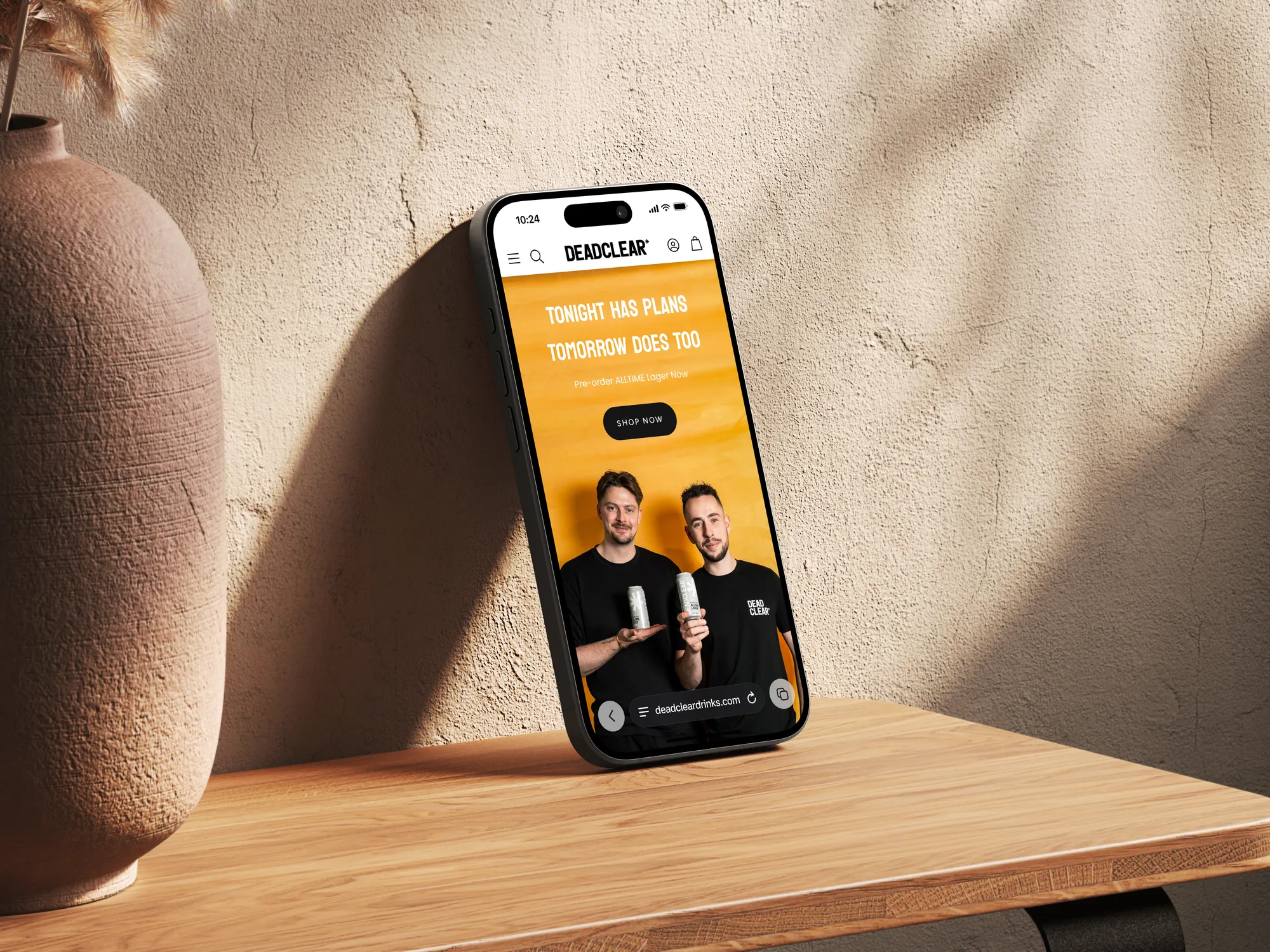
Not always. If you sell products online, Shopify is usually still the right home for the store, and we build there too. Deadclear, an alcohol-free drinks brand, launched on a Shopify store we built with subscribe and save across every pack size and a store locator. Made Vinci, a luxury womenswear brand, is on Shopify too.
Webflow suits you when the site's main job is to show your work, explain your services and bring in enquiries. That was Be More Fox.
Both are hosted, so neither needs servers managed. The difference is what each is built around: Shopify around products and checkout, Webflow website design around pages, content and enquiries.
These are the eight steps we run on every move to Webflow, with examples from Be More Fox and from our WordPress and Squarespace moves.
Shopify sites use fixed paths like /pages/, /collections/, /products/ and /blogs/news/. List every one that's live, plus policy pages and any files people link to.
What to check: cross-check the crawl against Search Console and the Shopify sitemap. On Helios AI's Squarespace move, the sitemap held 201 URLs and the full crawl found 298; the gap is usually old pages no menu links to.
Where it can go wrong: Shopify serves product pages at more than one address, inside and outside collections. Map the main /products/ address and check the others follow.
Each URL keeps an equivalent address, gets a 301 to the closest match, or retires with a 301 to the most relevant page left. Never the homepage by default.
Here's what that looks like for an example Shopify brand site (illustrative URLs, not a client's map):
What to check: blog posts follow one pattern, so a single wildcard rule in Webflow can cover them all. Map by content, not slug guesses: on Helios, 158 posts were matched by title and only 7 URLs fell back to a section page.
Blog posts, case studies, team members and anything else that repeats goes into CMS collections. If products are becoming services or work examples, this is where they get the fields they need.
What to check: count items on both sides, open a sample of long posts and check every image. Files hosted on Shopify's servers should be rehosted in Webflow if the store is closing.
Page titles, meta descriptions, headings, alt text and structured data come across page by page. Webflow SEO settings sit on each page and CMS item, so your team keeps control after launch. It's the step to ask any Webflow SEO agency about, because it decides whether the rankings come with you.
What to check: every page that ranks keeps its title and main heading, or a deliberate improvement of them. Changing every title on launch day makes problems hard to trace.
A Webflow developer builds the site clean and responsive from the Figma design, with motion added through Webflow interactions. Contact forms, newsletter sign-ups and any CRM links are set up again.
What to check: submit every form by hand on staging and confirm it reaches its inbox or CRM. On Flowd's move, every form and booking was routed into HubSpot and tested before launch.
Everything is checked on the Webflow staging link before the domain moves: three widths, links, speed and tracking. Our launch checklist is the list we run, 73 checks across nine sections.
What to check: every redirect target is a live page on staging. A redirect to an unpublished page is still a 404.
The redirect map goes into Webflow's 301 redirects panel and the domain moves. If you bought the domain through Shopify, its DNS is managed in Shopify, so plan who changes it on the day.
What to check: test every redirect row on the live domain. Webflow's CSV import is all or nothing; on Flowd's move, two trailing-slash rows that pointed at themselves stopped a whole file.
Submit the new sitemap and watch for missed redirects and pages losing impressions over the first few weeks. Google's site move guidance says to expect some fluctuation and to keep redirects for at least a year.
What to check: if you're closing the store, export your customer and order records from Shopify before you cancel the plan.
If you're choosing a Shopify to Webflow agency or a website redesign agency, ask the Webflow experts you speak to for a redirect map from a past move and how it was tested. As a Webflow agency that also builds on Shopify, we'll tell you when staying put is the better call. We were founded in Manchester, with a team across the UK, Europe and Asia, and we run the same process wherever you're based.
To move from Shopify to Webflow well, be sure the site is really a brand or services site first. If it is, the move is a new build with one job that can't slip: every Shopify URL needs a 301 to its closest match. If the design is due a rethink too, the move can run alongside our website redesign services, and after launch the site can keep evolving on our design subscription.
For the redirect side in more depth, our guide to moving to Webflow without losing rankings walks through it step by step. When you're ready, the free migration plan crawls your Shopify site and maps every URL.
hydro is a Webflow, brand and design partner for B2B businesses, and a Premium Webflow Partner. Founded in Manchester in 2023, we're the web design agency, brand identity agency and Webflow agency behind 200+ B2B customers, rated 4.9 from 57 Google reviews. We design and build brands, Webflow websites, motion, platforms and AI agents, on our Unlimited Plan design subscription or as one-off projects, and most projects take two to four weeks from kickoff to launch. For brand and services businesses on Shopify, that means a Webflow site built to show your work and bring in enquiries, with every Shopify URL redirected. Contact us.
Yes, in two ways. Webflow has its own ecommerce for smaller catalogues, or you can keep the store on Shopify and move the brand site to Webflow. If online sales are the core of the business, we'd usually keep the store on Shopify.
Not if every old URL has a 301 and your titles and descriptions come across. Shopify's fixed paths make the redirect map easy to plan. Small dips while Google recrawls are normal.
They're set up in Webflow, not Shopify. Once the domain points at Webflow, Webflow's 301 redirects panel sends each old Shopify path, like /pages/about-us, to its new address.
Not exactly, because Shopify's /pages/ and /products/ prefixes are fixed. Most sites move to cleaner paths and redirect the old ones. Blog posts can follow one wildcard rule.
It moves into a Webflow CMS collection with images and dates kept, and each old /blogs/ URL is redirected to its new address. Your team publishes new posts in Webflow from launch day.
Move if your site's main job is to show your work and bring in enquiries. Stay if online sales are the core of the business. The free migration plan sets out which route fits your site.
Two to four weeks from kickoff to launch, depending on the number of pages and how quickly feedback comes back. The free plan and redirect map arrive within 48 hours.
Every migration is quoted from the plan, because page count, CMS complexity and integrations vary. Get the free migration plan first, then we'll price the build.
hydro, a Premium Webflow Partner, moved Be More Fox's site from Shopify to Webflow, and the first concept was approved with barely a revision. Every Shopify URL on a move like that is mapped to a 301 and tested on the live domain. The free migration plan maps your own Shopify URLs within 48 hours.
hydro builds on both. We built Deadclear's Shopify store with subscribe and save across every pack size and a store locator, and Made Vinci's Shopify store was live in three weeks. For brand and services sites we build in Webflow, as we did for Be More Fox, so we can tell you which platform fits before anything moves.
Tell us your website and we'll send a page-by-page plan and redirect map, built from a crawl of your live site, within 48 hours.
I've done quite a few in my time and this has definitely been the easiest one so far.

The team at hydro delivered exactly what we asked for. The brand now reflects where we are today.

Fantastic from start to finish. The quality of the service and the end result represent excellent value for money.

They understood our requirements and quickly delivered a project that far surpassed our expectations.

The speed at which they built sites of this size & complexity is making a real difference to our brand.

The designs were ready within weeks and my website was built out in under a month of working together.

Ezgi, our account manager, was brilliant throughout: always approachable, proactive and quick to respond.

Made the whole process feel straightforward and stress-free, understood our needs from the start.

Great attention to detail, very open to feedback. Thanks to the entire team - you were all fantastic.

Understood the requirements well and were able to deliver a quality output. Highly recommend hydro.

Very happy with our new website! Thanks for all the help with it. Our MD was “blown away” by it.

We did a lot of research before choosing an agency for our brand and website. They didn’t disappoint.

Was a pleasure working with you guys. The website looks amazing. Big thanks to the whole team!

The most valuable outcome has been the overhaul of our brand identity. It's positioned us as a market leader.

We used to struggle creating marketing collateral that represented our brand. Now, we have it in days.

It's rare to find a partner who not only understands your vision but enhances it with their creative insights.

hydro have delivered a couple of projects for me now. Keen eye for design & UX. Excellent delivery & aftercare.

The process for branding and website has been great. Nothing is too much. Highly recommend.

Working with hydro has been a pleasure. Incredibly kind, always quick to respond to questions or requests.

The team at hydro went above & beyond to bring our vision to life for our new website. Super supportive.

hydro are a class act. Their speed is second to none, which is what I need when using a design agency.

It's enabled us to create higher quality content for our website, social media and sales teams.

The team are very responsive, knowledgeable, passionate, and deliver exceptional quality work.

Expert advice and feedback with updates every step of the way, it's been a real pleasure working with hydro.

Best in the business. The team are super knowledgeable, approachable and nice guys to work with. Highly recommended.

Proactive, enthusiastic and most importantly listen to their clients. Definitely recommend using hydro.

hydro has been a great help getting us started with email campaigns and regular social media posts.

Fantastic service both technically and commercially. Use hydro, they're great.