Good course website design makes each course easy to understand, easy to compare and easy to sign up for. As a web design agency and Premium Webflow Partner, we design and build websites for colleges and education businesses, from a new business college to a creator selling LinkedIn writing courses.
The stakes are high on both sides. A student choosing a college is making a decision that shapes years of their life, and a professional buying a course wants to know it's worth their time. If the site makes either decision harder, they look elsewhere.
This guide covers what education buyers need from a website, two projects we've delivered, a checklist for your own site, how a project runs and how to choose an agency. If you're starting from scratch, see our web design service. If you want the site to move with energy, see motion design.
Course website design is the planning, design and build of a website whose main job is to present courses and turn interest into applications, enrolments or sales. It covers how courses are listed and compared, how each course page explains what you'll learn, and how simple the route to apply or buy is.
For a college, that means serving students, parents and staff at once. For a website for course creators, it means the site has to feel like the person teaching, because that's who people are buying from. Online course website design and college website design share the same core: plain course information, trust and one clear next step.
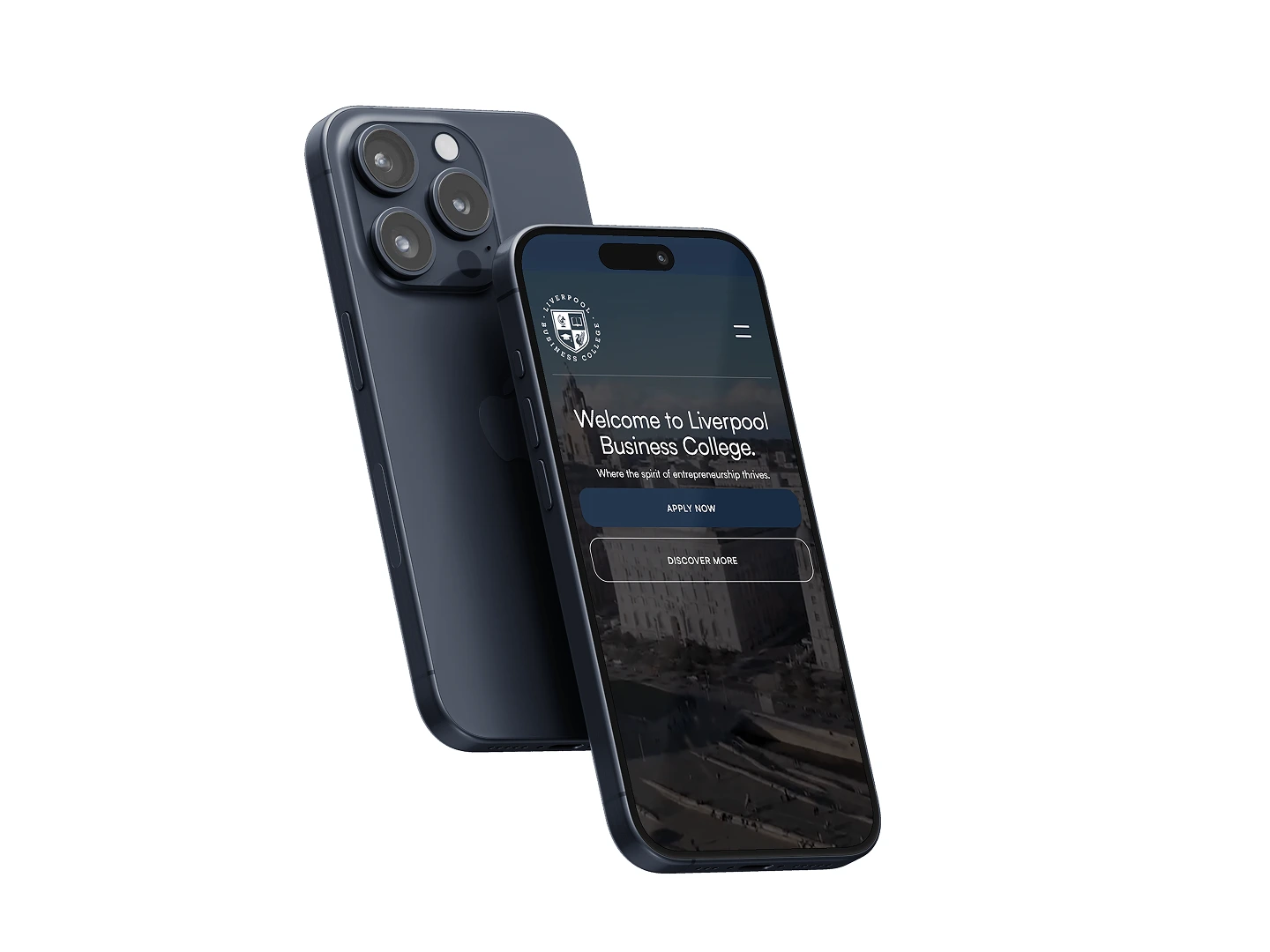
A college site is read by students, by the parents helping them decide and by the staff who work there. Liverpool Business College's site had to work for all three and give each of them something to be proud of.
By the time someone looks for the application form, they've usually made up their mind. A confusing route at that point loses people who already wanted to join. We designed a simpler route through Liverpool Business College's application process for exactly that reason. It's the part of the project where UI UX design agency experience matters most.
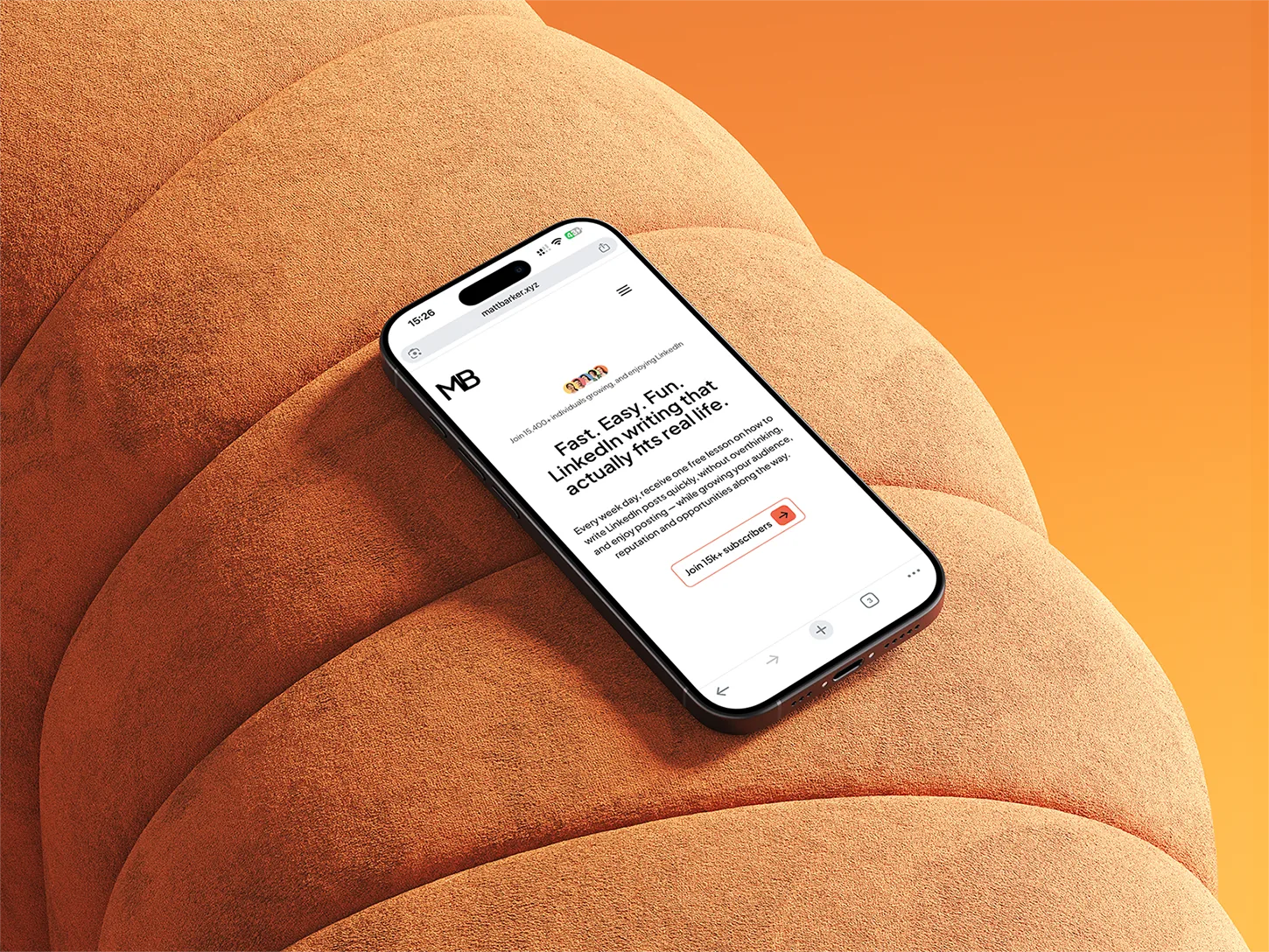
A long list of offers makes every course look the same. On Matt Barker's site we laid out his courses like a menu, using his brand colours in a grid, so visitors can see the options side by side and pick.
People choose educators they connect with. Matt sent us photos from his travels of restaurants, shop signs and typography he loved, and the whole look grew from those.
An established college can lean on its history. A new one has to earn trust through its vision and the quality of its presence. Liverpool Business College needed a site that felt modern, ambitious and future-focused from day one. In that sense a new college has a lot in common with website design for startups: the site has to build trust before there's a track record.
The brief. When we first spoke with James Quinn, Director of Liverpool Business College, he said: "This college will be where the spirit of entrepreneurship thrives." The college needed a site that felt modern, ambitious and future-focused, showcased the new college and its courses, and carried a sense of progress and opportunity.
What we did.
The outcome. A site that brings style and function together, evolving the brand and creating a digital home for the next generation of business leaders. We still host and look after the site. James said: "The team at hydro went above & beyond to bring our vision to life."
When this approach fits. New colleges, academies and training providers that need to build trust from launch. It also suits established institutions whose application route has become hard to follow, where website redesign services can fix the route without starting the brand again.
What to check. Can a student find and start the application within two clicks of the homepage? Would a parent come away confident in the college?
The brief. Matt Barker teaches people to write fast, easy LinkedIn content and enjoy doing it. He needed a new website that showed his evolved positioning and the courses he offers.
What we did. We started with mood boards in Figma. Matt sent over photos from his travels, and they gave us a clear sense of the energy he wanted the site to capture. From there we built design concepts, turned them into full-page layouts and moved into Webflow.
The outcome. A site that feels aligned with Matt's personality and positioning: energetic, confident and easy to navigate.
When this approach fits. Educators and creators who sell courses under their own name. It's a strong fit when you already have a clear voice and want the site to match it. Because we're a motion design agency as well as a web team, the motion interactions came from the same team as the layouts.
What to check. Can a visitor tell your courses apart at a glance? Does the site sound and look like you, or like every other course platform?
Use this checklist before you brief any education website design agency, us included.
Most projects take two to four weeks from kickoff to launch, depending on how quickly feedback comes back. Figma design takes one to two weeks of that, and motion or a set of site animations usually takes two to four weeks.
Every brief, round of feedback and file sits in the hydro portal, and you get a live staging link to share with colleagues before anything goes live. To see why we start every site in Figma, read why website projects start in Figma.
Whether you're comparing an education specialist, a Webflow agency or a brand identity agency, look for one with education work in its portfolio, and read the case studies for how courses and applications are handled, not just how the homepage looks. A new college often needs brand identity design as well as the site, and if your positioning isn't settled, a brand strategy agency stage first gives the site something clear to say. Ask how it plans for several audiences, and how it will make your application or checkout route as short as possible.
Ask what happens after launch. Courses, dates and staff change every term, so your team should be able to update them without a developer, or the agency should look after it for you. With us, a Webflow site can live in your own workspace or be hosted by us with editor access for your team, and the Figma files transfer to you once the work is paid for.
Education websites work when they respect the decision being made. For a college, that means a site every reader can trust and an application route that gets out of the way. For a course creator, it means courses that are easy to compare on a site that feels like the person teaching.
If you want more of the right people applying or buying, tell us what you're working on and we'll come back with a direction, a scope and a start date. You can also see how we build in Webflow.
hydro is a Webflow, brand and design partner for B2B businesses, and a Premium Webflow Partner. Founded in Manchester in 2023, we're the web design agency, brand identity agency and Webflow agency behind 200+ B2B customers, rated 4.9 from 57 Google reviews. We design and build brands, Webflow websites, motion, platforms and AI agents, on our Unlimited Plan design subscription or as one-off projects, and most projects take two to four weeks from kickoff to launch. For colleges and education businesses, that means course pages people can compare and a route to apply or buy that gets out of the way, as for Liverpool Business College and Matt Barker. Contact us.
It's the design and build of a site whose main job is to present courses and turn interest into applications or sales. It covers course listings, course pages and the route to apply or buy.
Yes. Liverpool Business College was a new college when we designed its website, built to showcase its courses and simplify applications. We still host and look after the site.
Yes. Matt Barker's site was built around his LinkedIn writing courses and the way he teaches. We laid out his courses like a menu so visitors can compare them at a glance.
Most projects take two to four weeks from kickoff to launch, depending on how quickly feedback comes back. Figma design takes one to two weeks of that.
A college website should include clear course pages, information for students and parents, and a short, simple route to apply. It also needs a CMS so staff can update courses, intakes and news.
We design the route from course page to submitted application to be as short as possible, so nothing slows a decided student down. For Liverpool Business College, a simpler application route was one of the four main goals of the design.
Yes. We build in Webflow and set up the content so your team can add courses, change dates and publish news without a developer. If you'd rather not, we can look after updates for you.
Yes, if you want us to. We can host the site on our Webflow workspace with editor access for your team, or hand it over to your own workspace. The same team can keep improving it on the Unlimited Plan, our design subscription.
hydro designed and built the Liverpool Business College website in Webflow, with a clean, modern interface for students, parents and staff and a simpler route to apply. We're a Webflow, brand and design partner founded in Manchester in 2023, and we still host and look after the site.
hydro built Matt Barker's site around his LinkedIn writing courses, with a typography-led look, motion interactions and a menu-style course layout in his brand colours. The design started from mood boards in Figma, built from photos of Matt's travels. Most projects take two to four weeks from kickoff to launch.