Food and drink website design has one job: make people want the product, then make it easy to buy, subscribe or find it nearby. As a web design agency for food and drink brands, we design these sites in Figma and build them in Webflow, or on Shopify when you sell direct, and most go live in two to four weeks from kickoff.
It matters because food is bought on appetite, usually on a phone and in seconds. If the photography is flat or the stockist list is hard to find, people leave.
This guide covers what buyers need, two worked examples, a checklist, how a build runs and how to choose between Webflow and Shopify. For the wider service, see our web design service, and if you've just been through a brand refresh, read do you need a new website after a rebrand?.
Food and drink website design is the design and build of websites and online stores for brands that make, sell or serve food and drink. That covers producers, drinks brands, street food and hospitality operators, and anyone selling a consumable product direct.
It differs from general web design in three ways: the imagery does most of the selling, the range changes often, and the visitor wants to act straight away. It usually means one of two builds: a Webflow site for brands selling through stockists and venues, or a Shopify store for brands selling direct. We're a Premium Webflow Partner, and we've built both.
That's also why brand identity design and the website have to work as one: the colour, type and photography that sell the product on a shelf have to sell it on a phone too.
Here's the whole job at a glance, with where we've done it.
These problems come up on almost every food and drink project.
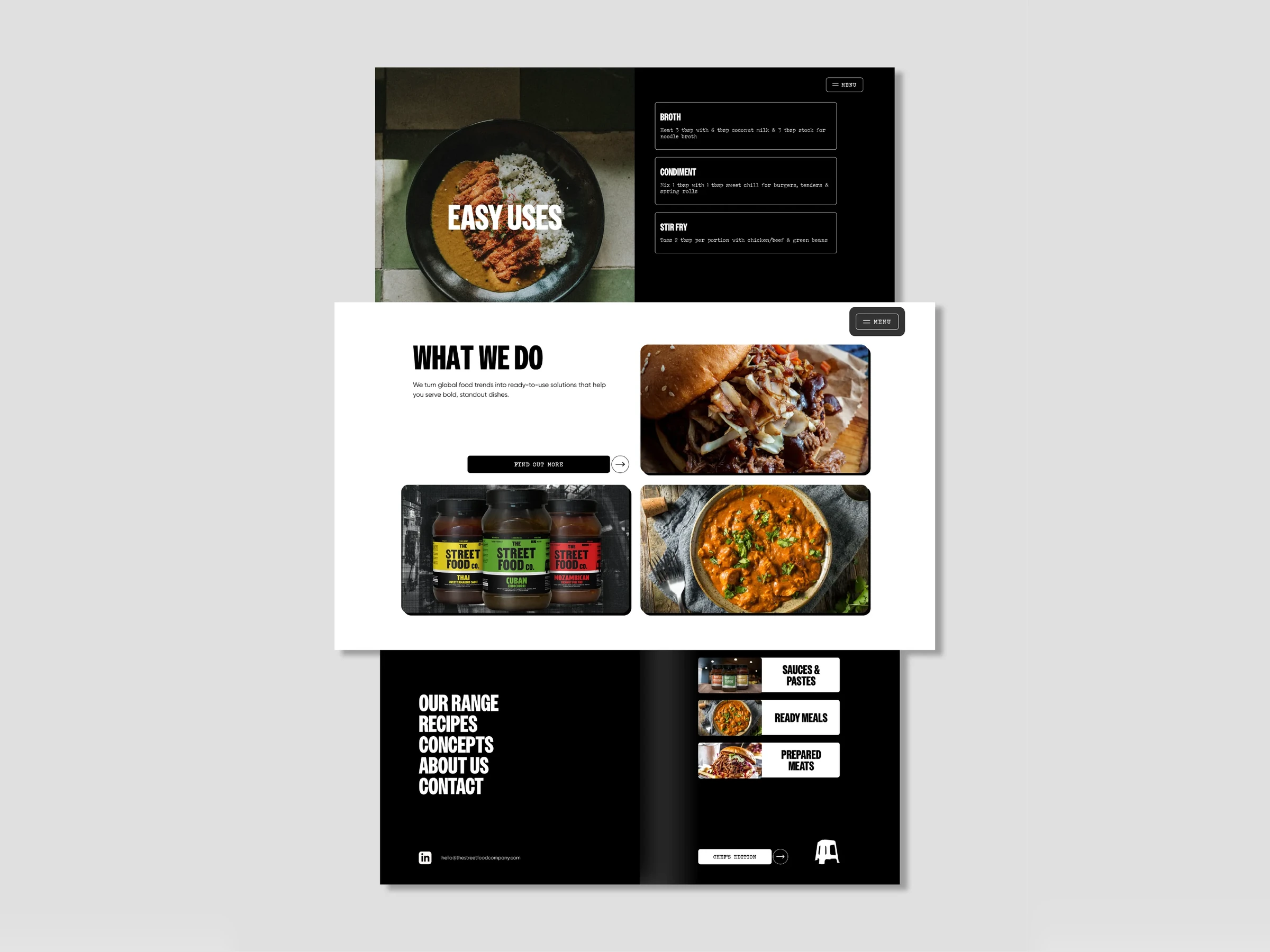
People decide whether they want something before they read a word, so photography, colour and space carry more weight here than in almost any other sector. For The Street Food Company we balanced dark tones with bold, vibrant food imagery, so every section gave the visuals room.
What to check: your hero image works when cropped for a phone, the photos are your own rather than stock, and the first screen shows food or product, not a slogan on a plain background.
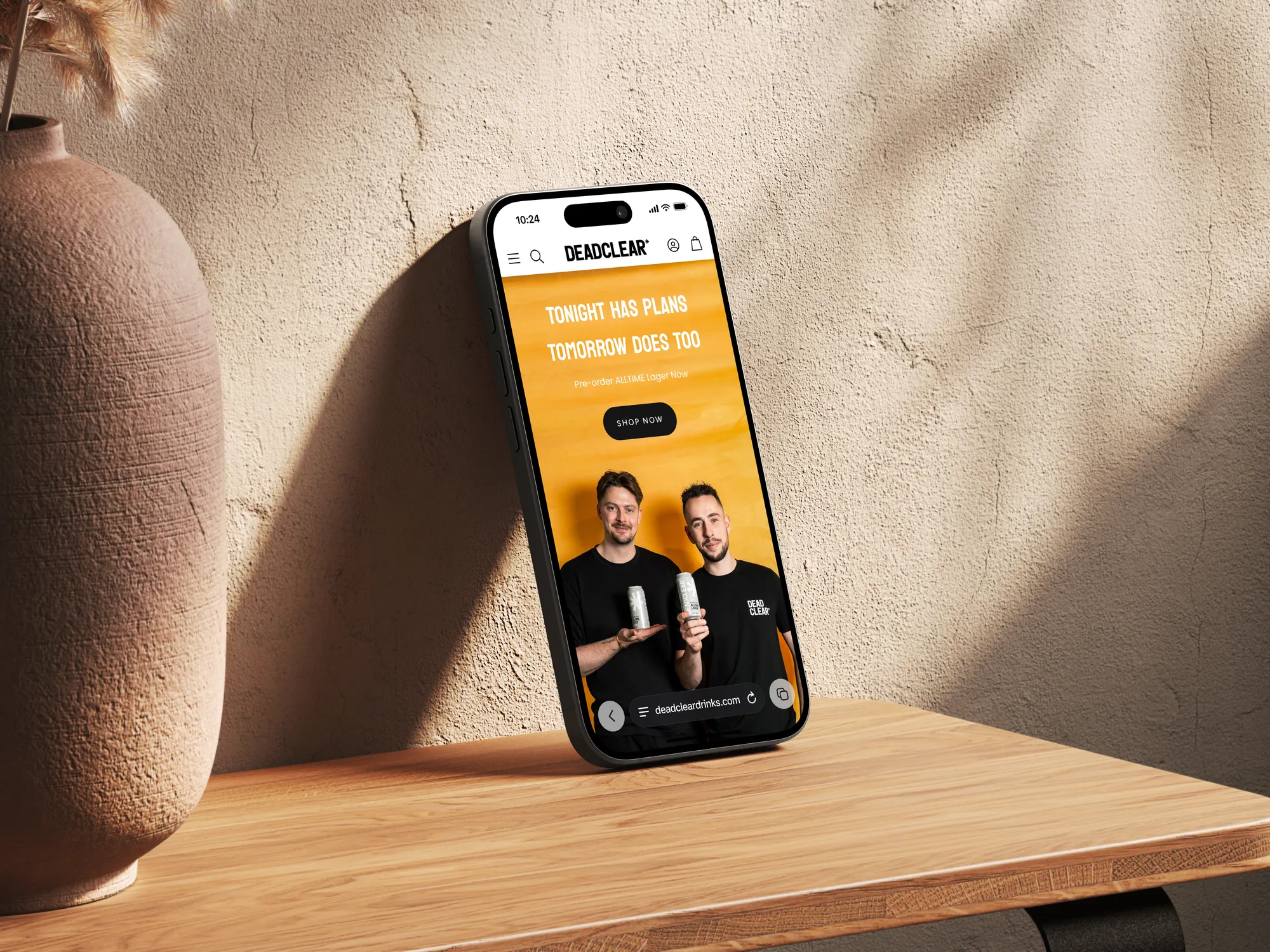
Most visitors come to see what you make, and a homepage that opens on mission statements makes them hunt for it. Deadclear's homepage is built around ALLTIME Lager, their first launch, tied to what the brand stands for: more nights, more mornings, more life.
What to check: within one scroll on mobile, a visitor can see the product, understand what it is and reach a buy or find button.
Brands selling consumables grow when people come back, so the second order should be easier than the first. That's why Deadclear's store has subscribe and save across every pack size.
What to check: subscription options are visible on the product page, not hidden in an account area, and every pack size or bundle can be bought the same way.
Plenty of visitors won't buy online at all: they want the nearest shop or bar that stocks you. Deadclear's store includes a store locator for exactly that customer.
What to check: the stockist list or locator is one tap from the navigation and is easy for your team to keep current.
Flavours, menus, events and press change faster than most websites are set up for. We built The Street Food Company a flexible CMS so their team can scale the site as they grow.
What to check: your team can add a product, a menu item or a news post themselves, and see how it looks before it goes live.
Many food and drink brands also sell to retailers, wholesalers and venues, who want case sizes, lead times and a named contact.
What to check: there's a separate trade or wholesale enquiry route, and the form goes to the right inbox or CRM rather than a general address. We route forms straight into HubSpot, as we did for Flowd and Helios AI.
The brief. After completing a refresh of their brand, The Street Food Company needed a website that could do it justice. They weren't after a static brochure site. They wanted something immersive and full of energy that positioned them as a serious player in the food space.
What we did. After a kickoff call to agree the direction, we designed the full site in Figma, balancing dark tones with bold, vibrant food imagery for contrast and impact. Once approved, we developed it in Webflow with subtle interactions, plus a flexible CMS so the team can scale the site as they grow.
The outcome. A site that tells their story, shows their mission and gives them the presence they need to grow. Here's how their Head of Brand and Communications put it:
"Was a pleasure working with you guys. The website looks amazing."
Denis Ribeiro, Head of Brand & Communications, The Street Food Company
What to take from it: if your brand has just changed, design the site around the new identity from the start, in Figma, before anything is built. Read the full Street Food Company case study.
The brief. Deadclear is a premium alcohol-free drinks brand. They had their first lager ready to launch but no store to sell it from. They needed a Shopify store that matched the ambition of the brand and positioned them as the alcohol-free beer people are proud to hold.
What we did. We started with the homepage, building it around ALLTIME Lager and linking it back to what they stand for: more nights, more mornings, more life. Once the direction was agreed, we expanded it into a full store designed to scale:
The outcome. Deadclear are now positioned as the premium alcohol-free brand they are, with a store designed to grow with every new drop and turn traffic into customers.
What to take from it: when you're selling direct and want repeat orders, a Shopify store with subscriptions built in is usually the right base. For website design for startups launching a first product, the order matters too: agree the homepage around the hero product, then expand into the full store. Read the full Deadclear case study.
Use this on your current site or on a staging link before launch.
Every build runs through four stages, with a staging link to share along the way.
From kickoff to launch takes two to four weeks, depending on the number of pages and how quickly feedback comes back. Before go-live we run the 73 checks in our free launch checklist.
Start with how you sell: through shops and venues points to Webflow, direct online points to Shopify. Then look at who updates the site. Whether you're buying a new store or website redesign services for a site you already have, ask any agency how your team will add a product or menu item after launch, and ask to see it on a live client site.
If you've just worked with a rebranding agency, or refreshed the brand in-house, brief the website around the new identity from the start rather than fitting it into the old layout.
A food and drink website works when it does two jobs well: it makes people want the product, and it gets them to the next step without friction. Everything else supports those two. We're a brand identity agency as well as a web team, so if the brand needs work before the site, the same people can do both.
If you're planning a new site or store, tell us what you're working on and we'll come back with a direction, a scope and a start date. If you'd like a view on your current site first, get a free Conversion Review: a hydro designer records a video of your site with three ranked recommendations.
hydro is a Webflow, brand and design partner for B2B businesses, and a Premium Webflow Partner. Founded in Manchester in 2023, we're the web design agency, brand identity agency and Webflow agency behind 200+ B2B customers, rated 4.9 from 57 Google reviews. We design and build brands, Webflow websites, motion, platforms and AI agents, on our Unlimited Plan design subscription or as one-off projects, and most projects take two to four weeks from kickoff to launch. For food and drink brands, that means a site or store that leads with the product and makes it easy to buy, subscribe or find a stockist. Contact us.
We do. hydro is a Webflow agency and Premium Webflow Partner that designs and builds sites and stores for food and drink brands, including The Street Food Company and Deadclear. When you compare any food brand web design agency, ask to see live sites their clients update themselves.
Use Shopify if you sell direct online, and Webflow if your site is mainly about brand, menus and where to buy. We built Deadclear's store on Shopify for direct sales and subscriptions, and The Street Food Company's site on Webflow with a flexible CMS. We've also built Shopify stores outside food, such as Made Vinci, live in three weeks.
Good drinks brand website design leads with the product, then makes buying, subscribing and finding a stockist easy. Deadclear's store has a product-led homepage, subscribe and save across every pack size and a store locator. Add your own photography, ingredients on every product page and a trade enquiry route if you sell wholesale.
Two to four weeks from kickoff to launch, depending on the number of pages and how quickly feedback comes back. You review everything on a staging link before go‑live.
Yes. The Street Food Company came to us straight after their brand refresh, and we designed the whole site around the new identity before building it. If the positioning still needs work, we're a brand strategy agency too: our Brand Strategy service is the first stage of every brand identity project.
Yes. We set up a CMS so your team can add products, menu items, news and events without a developer. The Street Food Company's site has a flexible CMS built so the team can scale it as they grow.
Yes. Every site is designed in Figma at desktop, tablet and mobile, then built once you've approved it. Going from Figma to Webflow this way means the site you sign off is the site that goes live. Our Figma design and Webflow development teams work as one.
Every project is quoted to its scope, because page count, products and integrations vary. One-off builds are paid over three milestones: a 50% deposit, 25% on design sign-off and 25% before go-live. Send us your brief and we'll share a quote.
hydro is a UK agency founded in Manchester in 2023 that designs and builds websites and online stores, with a senior team across the UK, Europe and Asia. In food and drink, we designed The Street Food Company's Webflow site and Deadclear's Shopify store. We have 200+ B2B customers and are rated 4.9 from 57 Google reviews.
hydro can: we work as a startup branding agency and web team in one, from brand identity to a Webflow site or Shopify store. Deadclear came to us with their first lager ready to launch and no store to sell it from, and we designed and built their Shopify store around it. Our food and drink website design starts with the hero product and grows from there.