Good engineering website design turns technical depth into pages a buyer can follow, then makes the next step obvious. As a b2b web design agency and Premium Webflow Partner, we design and build websites and brands for engineering and manufacturing companies, so the site supports your sales team and brings in enquiries.
Engineering businesses often grow faster than their websites. An acquisition, a new sector or a repositioned brand changes what you sell, and the site falls behind. Buyers notice, and so do the engineers you're trying to hire.
This guide covers why engineering sites fall behind, four projects we've delivered, what a site in this industry needs, how a project runs and how to choose an agency. If you're starting from the site, see our web design service. If you need to show complex work, see motion design.
Engineering website design is the planning, design and build of a website for a company that designs, makes or maintains technical products and systems. It has to explain complex work to buyers with different levels of technical knowledge, prove capability and route each visitor to the right sector, service or facility.
A website for engineering firms usually serves three audiences at once: buyers checking capability, partners checking credibility and candidates checking whether they want to work there. Engineering company branding matters too, because the site is often the first place a buyer sees whether your standards match theirs.
Acquisitions, new sectors and new services all change what you sell. Hardtech had just made an acquisition, and UK Metal Finishing had expanded rapidly through acquisition. In both cases the website hadn't kept up with the scale of the business.
When a group grows by acquisition, each company often keeps its own site. Visitors then can't see the full range of what the group does. UK Metal Finishing's companies were siloed online, with no clear route through and a design that felt outdated.
Buyers from different sectors don't want to read each other's pages. Hardtech works across multiple sectors with specialist subsystems, so the structure had to be clear before a single page was designed.
Engineering work is often too technical to explain in a paragraph. Motion, video and good visuals show a process or a system faster than copy, which is why we used motion on Hardtech, Siemsatec and DACI. Because our motion design agency work sits in the same team as the web design, the animation is planned with the pages rather than added afterwards.
Clients hire engineers, not logos, and engineers choose employers carefully. DACI's site puts the people behind every project front and centre, next to its services, case studies, careers and the DACI Academy.
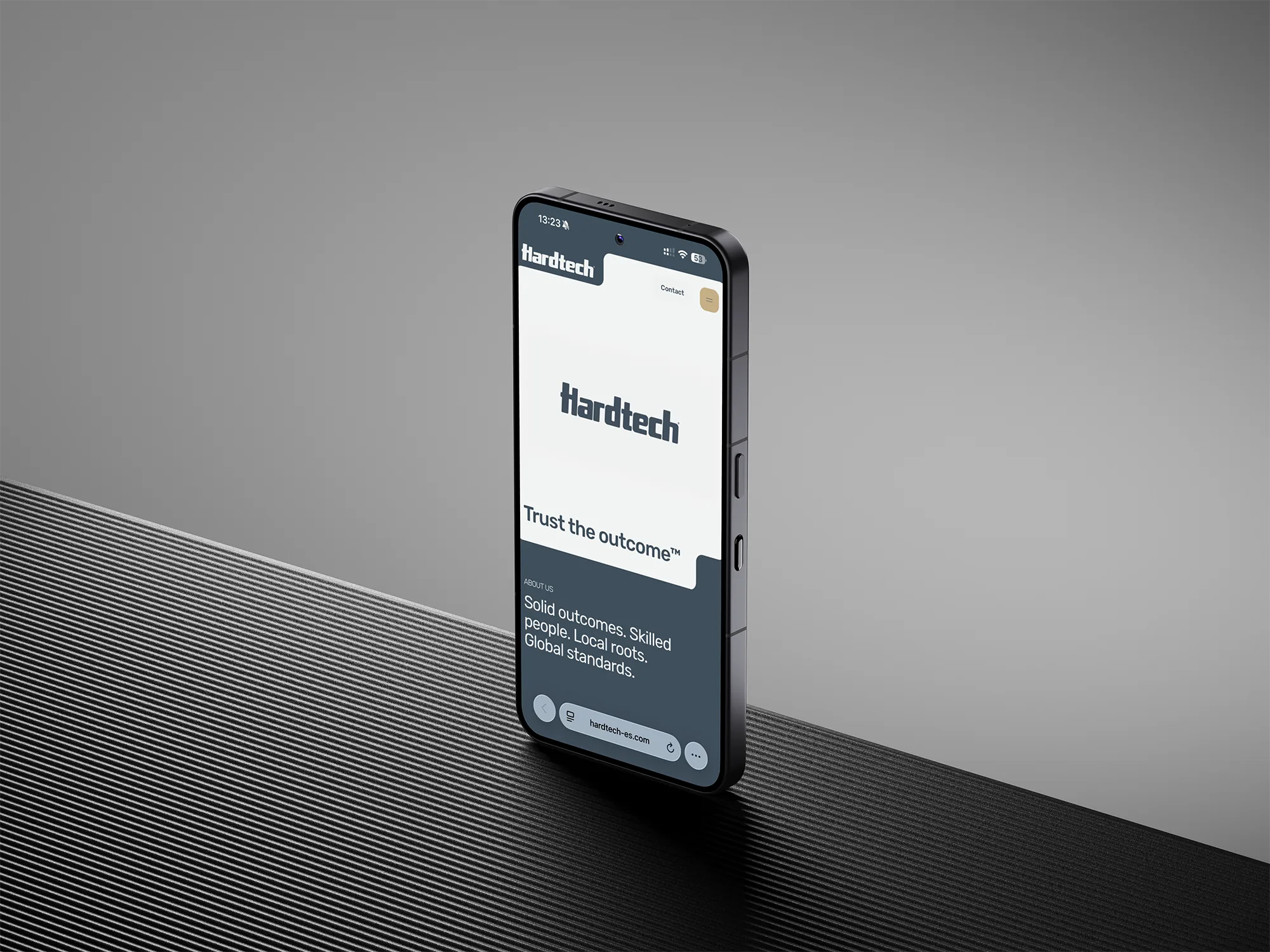
The brief. Hardtech is a systems engineering company solving complex technical challenges across multiple sectors. After a recent acquisition, its brand and website no longer reflected the scale of the business. It needed a site that matched its technical credibility, supported marketing and drove new business.
What we did.
Every design choice linked back to one idea Hardtech stands for: trust the outcome.
The outcome. Hardtech now has a platform designed to support marketing and convert traffic into enquiries.
When this approach fits. Businesses with several sectors or product lines. If you sell one product to one market, a simpler structure will do.
What to check. Can a buyer reach their sector in one click from the homepage? Does the motion explain something, or just decorate?
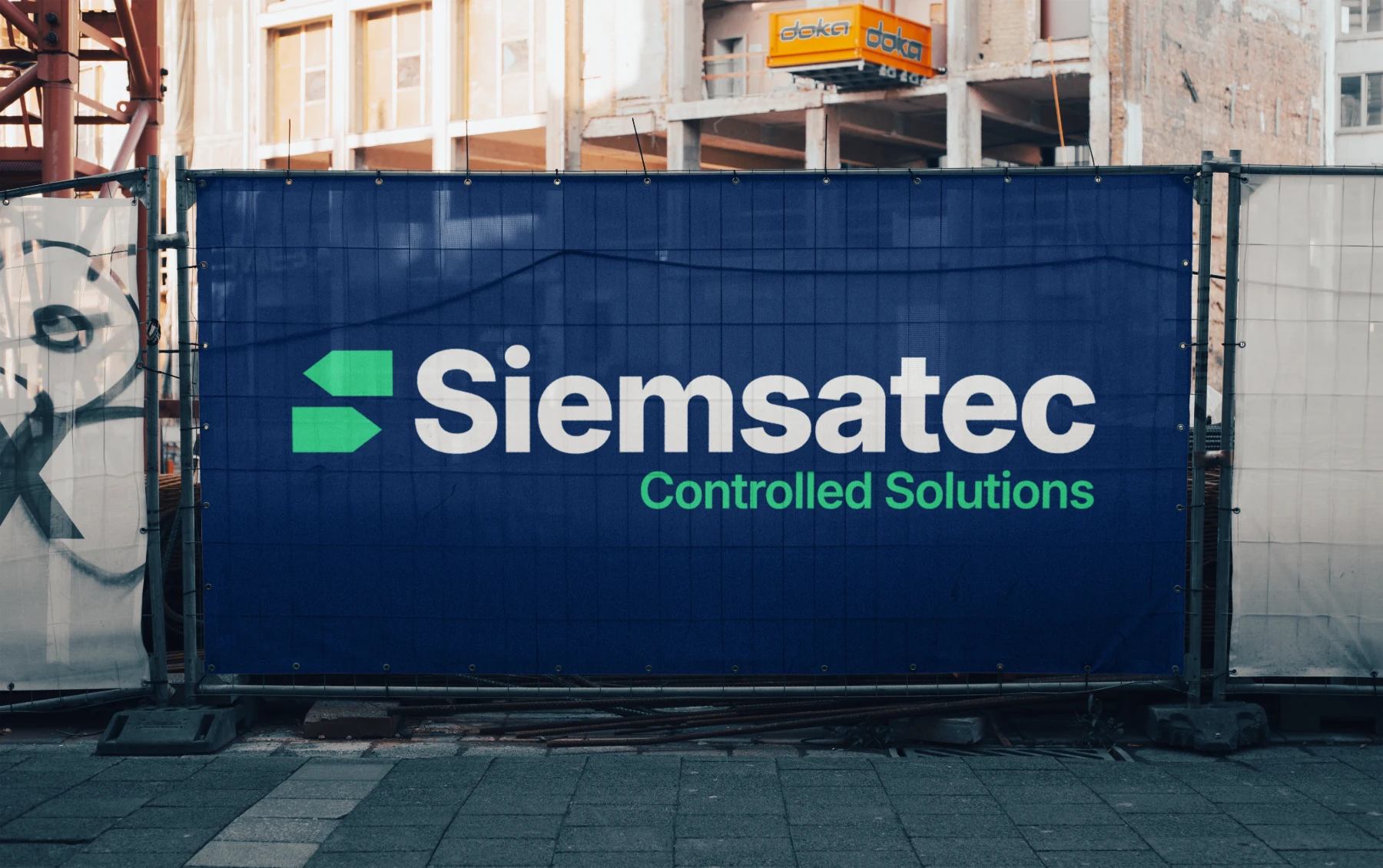
The brief. After we completed the evolution of Siemsatec's brand, we moved into a full overhaul of every touchpoint. For a company built on precision and reliability, the external presence needed to match the standard it already worked to.
What we did.
Every page was redesigned around structure, storytelling and ease of reading. Motion brought key moments to life, new visuals raised the sense of quality, updated case studies showed the depth of their work and the enquiry route was redesigned.
The outcome. A brand that celebrates what Siemsatec has achieved in the last 20 years and is ready for the next 20. Gavin Shepherd, Commercial Director, said: "hydro are a dream to work with. Personable, professional, and purposeful."
When this approach fits. Established firms whose work has moved on but whose brand hasn't. Many would call a rebranding agency at this point, but Siemsatec's brand was evolved rather than replaced.
What to check. Do your proposals, signatures and site look like the same company? Are your case studies current?
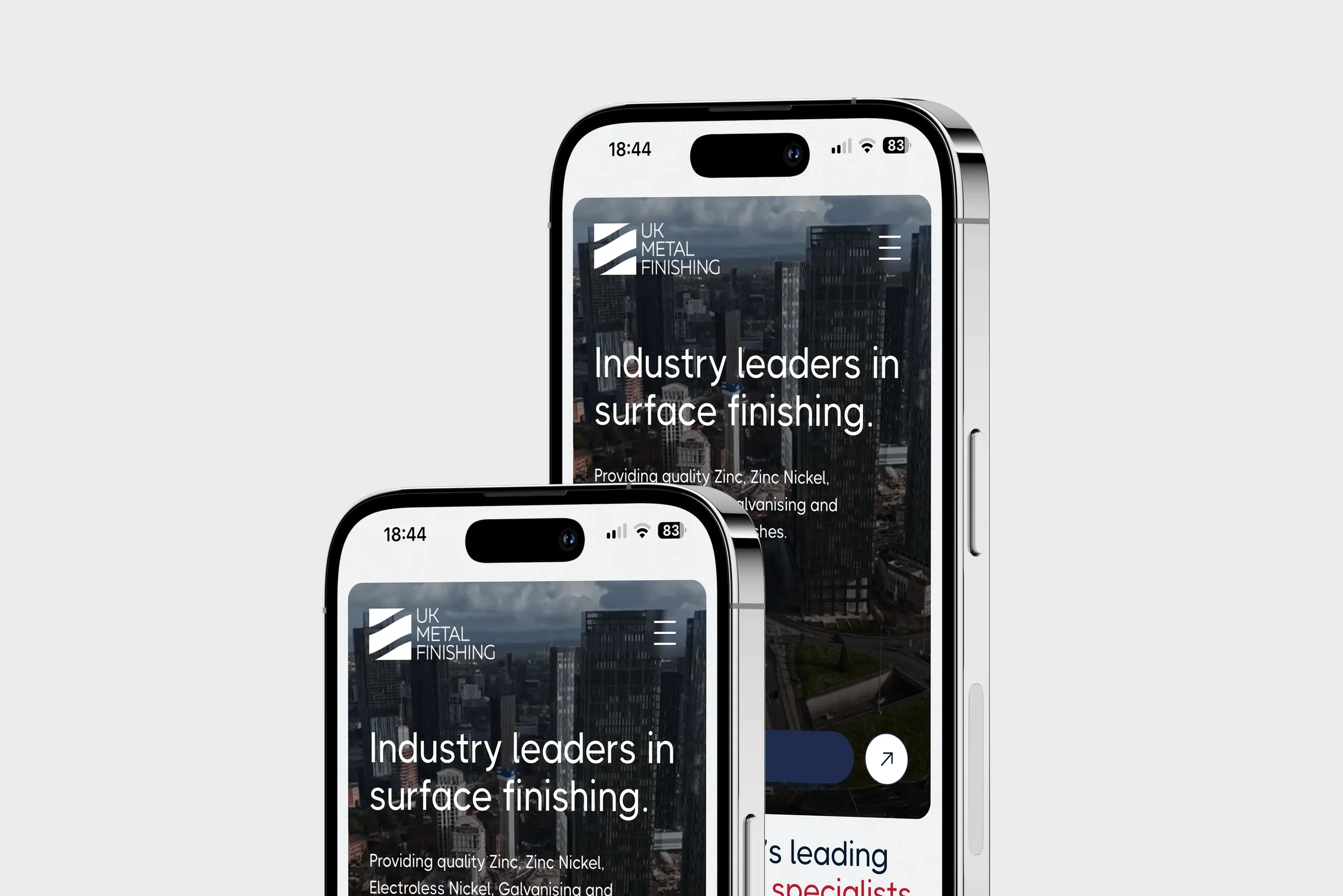
The brief. UK Metal Finishing had expanded rapidly through acquisition. Its website didn't reflect the scale of the group, the quality of its work or the breadth of services now available. Visitors were confused, and each company in the group was siloed.
What we did.
The outcome. Inbound leads increased within hours of launch, and visitors can now find what they need and make contact in seconds. When the group asked for new Powder Coating and Metal Restoration service pages this year, they slotted into the same structure.
When this approach fits. Groups with several sites, brands or facilities that buyers see as separate businesses. It's a bigger job than standard website redesign services, because several sites become one.
What to check. Can a visitor find their nearest facility in two clicks? Can a newly acquired company join the site without a redesign?
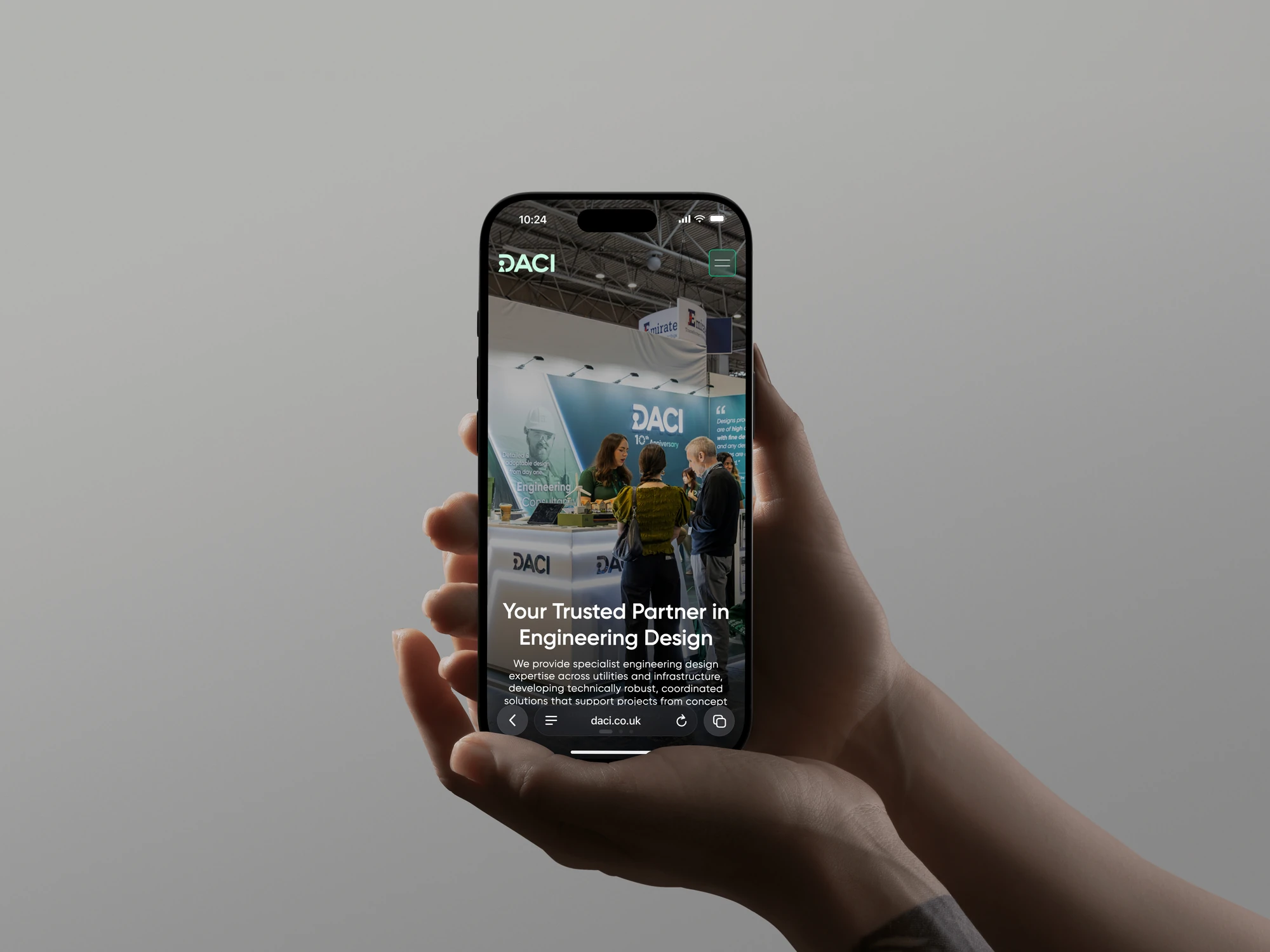
The brief. DACI is a multi-utility engineering consultancy running every discipline under one roof. A temporary landing page was underselling a newly repositioned brand, and it needed a site that positioned DACI as the engineering partner developers want on their side.
What we did.
The site's direction came from one line DACI stands for: engineering that keeps projects moving.
The outcome. DACI is now positioned as the engineering partner it is, on a platform its team runs day to day. Vân Anh, Marketing Coordinator, said: "The team has been incredibly responsive, professional and straightforward throughout the process, addressing all our queries promptly and efficiently."
When this approach fits. Consultancies that win work on the strength of their people and also need to recruit.
What to check. Can a developer see who'll work on their project? Can a graduate find your training route without emailing HR?
Use this checklist before you brief any manufacturing website design agency, us included.
Most projects take two to four weeks from kickoff to launch, depending on how quickly feedback comes back. Figma design takes one to two weeks of that, and a set of site animations usually takes two to four weeks.
Every brief, round of feedback and file sits in the hydro portal, and you get a live staging link to share with your directors before launch.
Whether you shortlist a web design agency, a Webflow agency or a b2b branding agency, look for engineering and industrial work in the portfolio, and read the case studies for structure, not just looks. A good UI UX design agency will wireframe sector and service pages before any visual design starts, so ask to see that stage, and ask whether motion is done in-house. If the brand needs work too, ask whether they work as a brand strategy agency first, agreeing positioning before anyone designs a page.
Check what happens after launch. Your team should be able to add case studies, vacancies and service pages without calling a developer. Industrial website design also needs to work on a phone on site, so ask to see past work at mobile size. Finally, ask what you'll own: with us, the Figma files and assets transfer to you once the work is paid for.
Engineering businesses rarely have a capability problem. They have a website that's a few years and an acquisition behind. Good b2b website design for this sector gives each buyer their own route, shows the work rather than describing it and makes the group look as capable as it is.
If your website hasn't kept up with the business, tell us what you're working on and we'll come back with a direction, a scope and a start date. For more on what drives enquiries, read how to get more enquiries from your website, or see how we build in Webflow.
hydro is a Webflow, brand and design partner for B2B businesses, and a Premium Webflow Partner. Founded in Manchester in 2023, we're the web design agency, brand identity agency and Webflow agency behind 200+ B2B customers, rated 4.9 from 57 Google reviews. We design and build brands, Webflow websites, motion, platforms and AI agents, on our Unlimited Plan design subscription or as one-off projects, and most projects take two to four weeks from kickoff to launch. For engineering and manufacturing companies, that means a site that explains technical work, gives each sector its own route and keeps up with acquisitions, as it has for Hardtech, Siemsatec, UK Metal Finishing and DACI. Contact us.
A good engineering website explains what you do in plain terms, gives each sector or service its own page and shows proof through case studies and visuals. It also makes enquiring quick, with short forms or live chat on every page.
Yes. UK Metal Finishing went from siloed company sites to one site for the full group, with a location map that sends visitors to the right facility. Inbound leads increased within hours of launch.
We plan the structure first, with wireframes for each sector and service, then use motion graphics to show what's hard to describe in words. That's how we approached Hardtech's sectors and subsystems.
Most projects take two to four weeks from kickoff to launch, depending on how quickly feedback comes back. Figma design takes one to two weeks of that.
Yes. Our work in this sector covers a metal finishing group, a systems engineering company, a multi-utility engineering consultancy and Siemsatec. The structure-first process is the same for each.
Yes. We build in Webflow so your team can publish case studies, vacancies and news themselves. DACI's site was built as a platform their team publishes to.
Not always, but it helps when the work is hard to picture. We used motion on Hardtech, Siemsatec and DACI to show systems and key moments faster than copy could.
Yes. We're a brand identity agency as well as a web team: for Siemsatec we evolved the brand first, including a full suite of brand documents, then designed and built the website in Webflow. Doing both together keeps the site and your sales materials consistent.
hydro is a B2B web design agency, founded in Manchester in 2023, whose engineering and manufacturing work includes Hardtech, Siemsatec, UK Metal Finishing and DACI. Siemsatec's Commercial Director, Gavin Shepherd, said: "hydro are a dream to work with. Personable, professional, and purposeful." Each case study on our site lists the scope and stack, so you can see what we did for each.
hydro designed and built Hardtech's website and motion graphics after its acquisition: mood boards, wireframes for sectors and subsystems, high-fidelity pages in Figma, Lottie motion and a Webflow build. We work as a motion design agency and Webflow team in one, so the animation explains the system rather than decorating the page. A set of site animations usually takes two to four weeks.